Source Digital Crankshaft Sensor for Server, Workstation, and Laptop
Find and compare 30 digital crankshaft sensor listings from China. These components support telephone, server, workstation, computer, and laptop applications. Options include ISO and CE certified parts with various OE numbers and packaging styles for diverse industrial needs; compare the available evidence and request quotations based on your requirements.
Key considerations
Products List


$15.00 - $20.00
Moq: 100


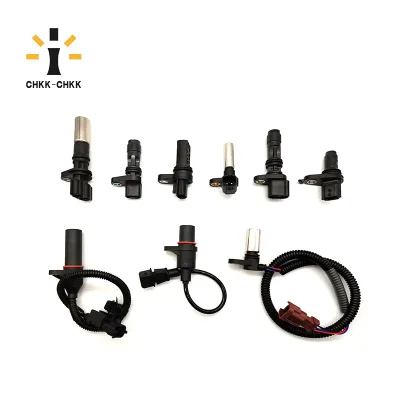


Comprehensive Sourcing Guide
Digital Crankshaft Sensor Sourcing Guide
Sourcing digital crankshaft sensors requires a disciplined approach to align technical specifications with operational reliability. These components are critical for engine management systems, providing precise timing data to the electronic control unit. Buyers must prioritize sensors that meet original equipment manufacturer standards to ensure seamless integration with existing vehicle architectures. The market offers various models, including those identified by OE numbers such as 04727336ab and 28129701, which serve different heavy truck and automotive applications.
Procurement decisions should be guided by verified product attributes rather than generic marketing claims. Observed listings indicate a wide range of origins, primarily from China, with specific manufacturing hubs in Chengdu and Guangdong. Buyers should verify that the sensor type matches their specific engine requirements, noting that some units are designed for heavy trucks like Weichai models. Understanding the distinction between standard and custom components is essential for maintaining fleet performance and minimizing downtime.
Product Scope and Observed Listing Signals
The current market landscape for digital crankshaft sensors reveals a diverse array of product listings with varying specifications. Observed data indicates a price range from 0.1 to 342 USD, reflecting differences in material quality, certification levels, and packaging standards. Minimum order quantities fluctuate significantly, ranging from single units to thousands, which impacts inventory planning for both small workshops and large fleet operators. Buyers should analyze these signals to determine the most cost-effective sourcing strategy for their specific volume requirements.
Product conditions are consistently listed as new, with packaging options including original, carton, and aluminum lamp packages. Some suppliers offer customization services, allowing for tailored solutions that meet unique engineering drawings or specific dimensional requirements. The presence of multiple model numbers, such as 20513343 and 90919-05005, suggests a broad compatibility matrix. Procurement teams must cross-reference these identifiers with their existing inventory to avoid mismatches that could lead to installation failures or performance issues.
Technical Specifications to Verify
Technical verification begins with confirming the output signal type, as digital sensors provide distinct advantages in noise immunity and data accuracy. Buyers should ensure the sensor delivers a digital output compatible with their vehicle’s electronic control unit. Material composition is another critical factor, with listings indicating the use of copper and metal for durability and plastic for housing. These materials influence the sensor’s resistance to heat, vibration, and environmental corrosion, which are common challenges in heavy-duty applications.
Dimensional accuracy and physical fitment must be validated against OEM standards. Observed specifications include standard sizes like 5x5x5 cm and custom dimensions based on drawings, such as 12x6.5x4.5 cm. The push-type technics and synthetic production processes suggest robust manufacturing methods. Buyers must verify that the sensor’s weight and size match the original component to ensure proper installation without modifying the engine bay. Misalignment can cause signal interference or mechanical failure, leading to costly repairs.
Compliance and Safety Documentation
Compliance with international standards is non-negotiable for automotive components. Buyers should request documentation confirming adherence to certifications such as ISO, CE, RoHS, and TS16949. These certifications indicate that the manufacturing process meets rigorous quality and environmental requirements. TS16949, in particular, is crucial for automotive suppliers, ensuring that the production system is capable of consistently meeting customer requirements. Without these credentials, the risk of receiving substandard components increases significantly.
Safety and performance testing are essential to validate the sensor’s reliability under operational conditions. Listings often mention 100% professional testing, which should be verified through independent reports or factory audits. Buyers must ensure that the sensor can withstand the thermal and mechanical stresses of engine environments. Documentation should also confirm that the product meets regional safety regulations, particularly if importing from China. Proper compliance reduces liability and ensures that the sensor integrates safely into the vehicle’s electrical system.
Cost Drivers and Commercial Terms
Cost structures are influenced by material choices, certification levels, and packaging requirements. Digital sensors with metal housings and copper components typically command higher prices due to superior durability. Customization options, such as specific packaging or drawing-based dimensions, add to the unit cost. Buyers should evaluate the total cost of ownership, including potential savings from reduced downtime and improved fuel efficiency, rather than focusing solely on the initial purchase price.
Commercial terms, including minimum order quantities and delivery times, vary widely among suppliers. Observed lead times range from prompt delivery to approximately 3-10 working days, depending on stock availability and production schedules. Shipping methods like DHL, UPS, and FedEx offer flexibility but impact overall costs. Buyers should negotiate clear terms for returns and warranties to mitigate risks associated with defective units. Understanding these variables helps in budgeting accurately and maintaining supply chain continuity.
Supplier Qualification and Quality Control
Supplier qualification requires a thorough assessment of manufacturing capabilities and quality management systems. Buyers should verify that suppliers have established processes for consistent production, as indicated by the synthetic type production processes mentioned in listings. Quality control measures, such as 100% professional testing, must be validated through on-site audits or third-party inspections. Suppliers with ISO and TS16949 certifications are generally more reliable, as these standards enforce strict quality protocols.
Communication and support are critical for successful procurement. Buyers should assess the supplier’s responsiveness to technical queries and their ability to provide accurate product information. Customization capabilities, such as producing components as per drawings, indicate a flexible and customer-oriented approach. Suppliers that offer neutral packaging or OEM packages demonstrate adaptability to different client needs. Establishing a strong relationship with a qualified supplier ensures long-term reliability and access to updated product information.
Long-Term Procurement Checks
Long-term procurement success depends on continuous monitoring of supplier performance and product quality. Buyers should establish key performance indicators, such as defect rates and delivery consistency, to evaluate suppliers regularly. Feedback loops with engineering teams are essential to identify any issues with sensor performance in the field. Regular audits of supplier quality systems help maintain high standards and prevent degradation over time.
Market trends and technological advancements should be tracked to ensure that sourced components remain relevant. As vehicle technologies evolve, sensor specifications may change, requiring updates to procurement strategies. Buyers should maintain a diverse supplier base to mitigate risks associated with single-source dependencies. Periodic reviews of cost structures and commercial terms ensure that procurement remains competitive. By staying informed and proactive, buyers can secure reliable digital crankshaft sensors that support their operational goals.
FAQs
What certifications do digital crankshaft sensors typically have?
Digital crankshaft sensors often carry ISO, GS, RoHS, CE, and TS16949 certifications. These standards ensure the product meets international safety and quality requirements for use in various electronic systems like servers, workstations, and automotive applications.
How is the delivery time for these sensors determined?
Delivery time is typically about 3 to 10 working days for standard orders. This timeframe depends on the specific supplier location, such as Chengdu or Guangdong, and the chosen shipping method like DHL, UPS, or FedEx for prompt global delivery.
Which packaging options are available for bulk orders?
Packaging options include original cartons, OEM packages, neutral packages, and specific lamp packages. Buyers can also request custom packing as required, ensuring the sensors are protected during transit while meeting specific logistical needs for industrial or automotive use.
Can I customize the specifications of the digital sensor?
Yes, customization is available for many digital crankshaft sensor models. Buyers can request specific dimensions, materials like copper or plastic, and output signals to match their unique application requirements, ensuring the component fits perfectly into their existing systems.
What is the minimum order quantity for these sensors?
The minimum order quantity ranges from 1 piece to 1000 pieces depending on the supplier. Some vendors offer a low MOQ of 1 piece for testing, while others may require 20 pieces or more for specific industrial or automotive grade components.
Which materials are commonly used in these sensors?
Common materials include copper, plastic, and metal, selected based on the specific sensor model and application. These materials ensure durability and proper signal transmission for digital output types used in heavy trucks, computers, and various electronic workstations.
How do I verify the quality of the digital sensor?
Quality is verified through 100% professional testing before shipment. Many suppliers ensure the product is new and meets OEM standards, providing confidence that the digital crankshaft sensor will perform reliably in demanding environments like heavy truck engines or server systems.